

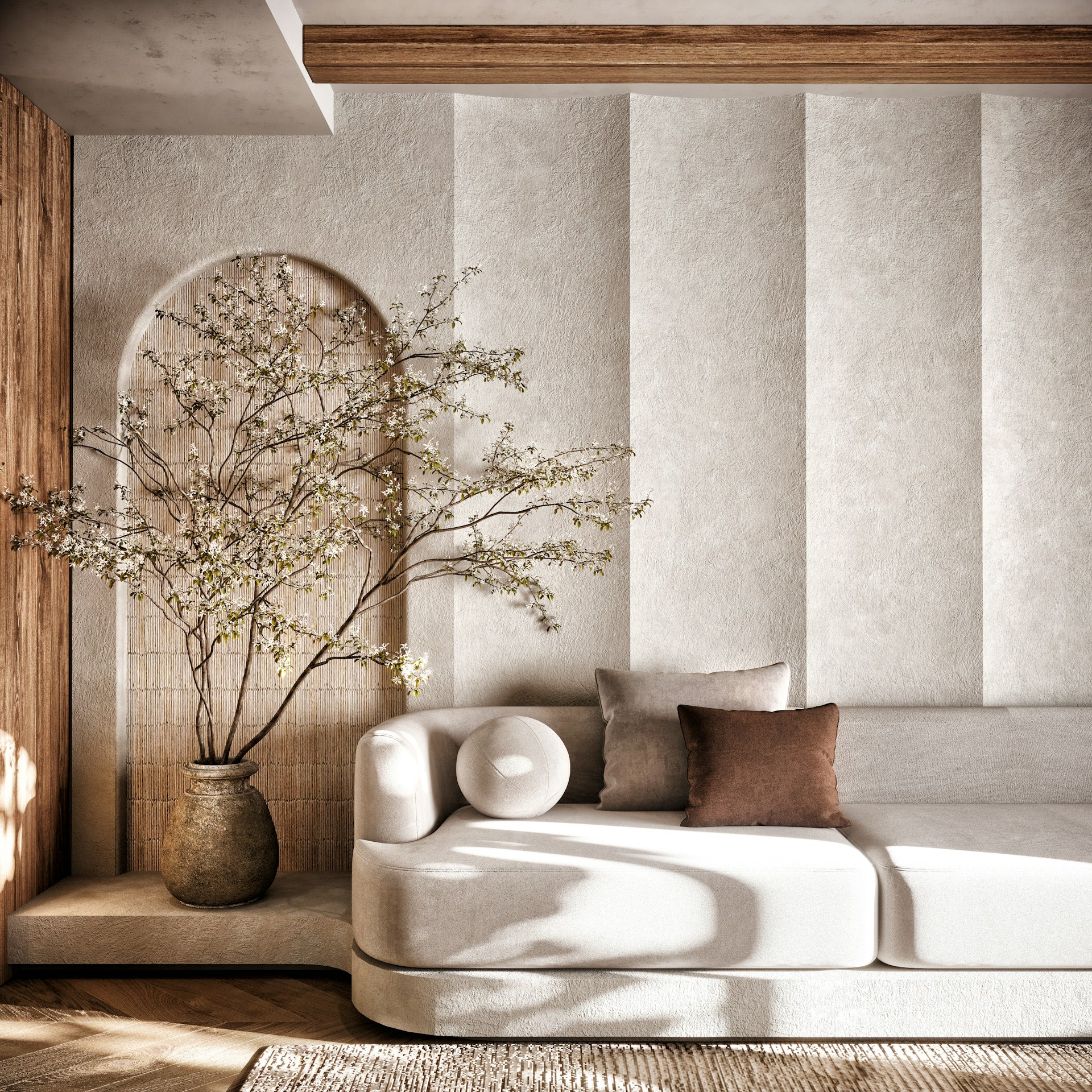
The Power of Texture
Texture is often overlooked, but it’s where comfort lives. Smooth marble countertops and polished woods may look sleek, but the soft weight of a woven blanket or the grounding roughness of linen bring sensory balance.
Consider building contrast: a wool rug underfoot against clean concrete floors, or hand-thrown pottery alongside a glass coffee table. The mix of materials creates layers, reminding us that imperfection, softness, and variety are part of life’s beauty.
Textiles in particular are silent anchors. A calm home often includes:
- Natural-fiber throws (cotton, linen, wool).
- Cushions in muted, earthy palettes.
- Rugs that soften footsteps while warming the room.

Nature as a Constant Companion
If calm had a color palette, it would be inspired by nature: the beige of sand, the deep green of pine, the warm clay of soil. Incorporating natural elements doesn’t just look beautiful—it resets our nervous system.
Bring the outdoors inside through:
- Plants: A cluster of small succulents on the kitchen counter, or a single statement fiddle leaf in the living room.
- Stone & Clay: Vases, bowls, or candle holders made of natural materials.
- Wood: Whether light oak or dark walnut, wooden accents ground a room.
Nature reminds us to breathe. It connects the rhythm of our homes to something much older, steadier, and more forgiving than modern life.

Rituals of Usefulness
A calm home is not only about what you place in it, but also how you use it. Rituals turn objects into anchors.
- A ceramic mug that becomes your morning coffee ritual.
- A candle you light each evening to signal the shift into rest.
- A reading chair where your phone never intrudes.
These rituals create predictability in a world full of uncertainty. They remind you that even small, ordinary acts can be sacred.

Designing with Less
Minimalism is often misunderstood as starkness or emptiness. True minimalism is not about less for the sake of less, but rather about choosing only what adds value to your life.
Ask yourself with each object:
- Does this serve me functionally?
- Does this bring beauty or inspiration?
- Does this carry a memory worth keeping?
If the answer is no, let it go. Simplicity is a gift not just to your space, but also to your mind.

Spaces that Invite Connection
Calm doesn’t mean isolation. A nurturing home should also encourage moments of connection—with loved ones, with friends, even with yourself.
Design your living room not just for display, but for gathering. Consider the placement of furniture: chairs angled toward each other, a coffee table that invites shared meals or board games, shelves filled not only with books but also with conversation starters—art, photos, or meaningful objects.
Connection, after all, is part of calm. It’s knowing that your home can hold both your solitude and your celebrations.

The Sound of Silence
Calm is not only seen and felt but also heard. Pay attention to the soundscape of your home.
- Natural Sounds: An open window with birdsong in the morning.
- Soft Backgrounds: Gentle music or white noise to mask city sounds.
- Intentional Quiet: A corner of your home where devices don’t intrude.
Silence is underrated, yet it’s one of the most powerful design tools. When you build spaces that hold quiet, you also build space for clarity.


